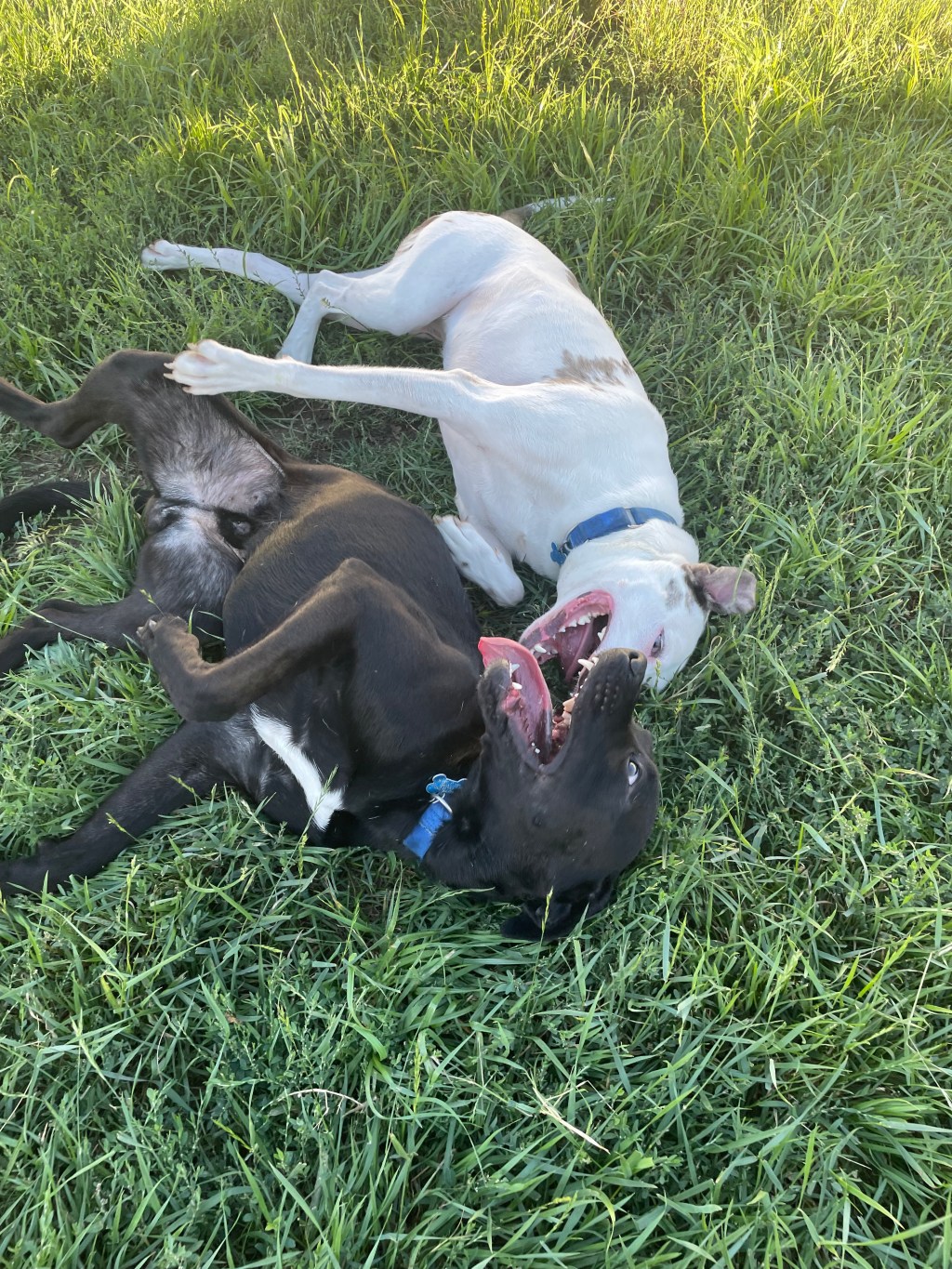
Walk into any dog park, and you’ll likely hear the same advice:
“Dogs need other dogs.”
But is that actually true?
If your dog would rather stay by your side than wrestle with every dog they meet, are they missing something? Or are they simply telling you who they are?
The short answer is this: most dogs benefit from positive interactions with other dogs.
But no, not every dog needs dog friends.
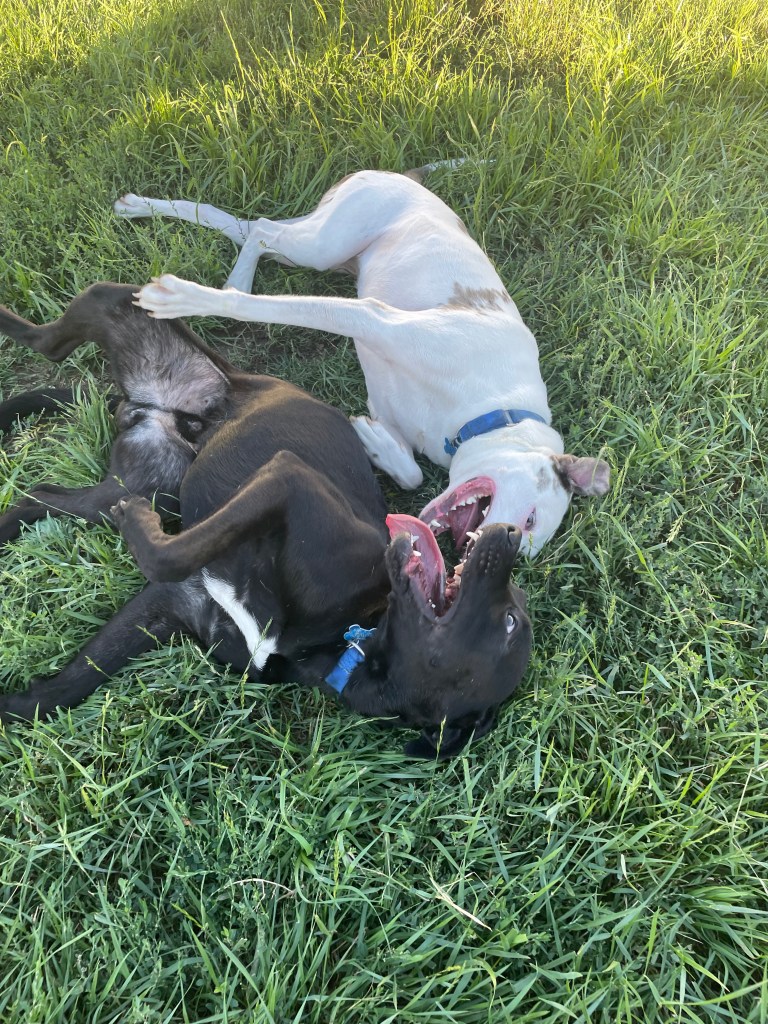
And forcing every dog to socialize can sometimes do more harm than good.
During my four years working in an animal shelter, I helped integrate thousands of dogs into daily playgroups. Unlike dog daycare, where dogs are typically carefully selected based on temperament and social skills, shelter dogs often arrived with unknown histories. Many had just been found as strays, surrendered by their families, or were experiencing the overwhelming stress of shelter life.
Every day, we worked to give dogs opportunities for healthy interactions with other dogs. For some, that meant joining a playgroup. For others, it meant walking alongside another dog. And for dogs who were fearful, reactive, or uncertain, it meant carefully controlled introductions at their own pace.
Over those years, I watched fearful dogs gain confidence, outgoing dogs become mentors, selective dogs teach appropriate boundaries, and a small number of dogs clearly communicate that they simply did not enjoy canine companionship.
Those experiences taught me something important:
Dogs are individuals.
So if not every dog needs dog friends, why do so many dogs benefit from them?
Dogs Speak a Language We Don’t Fully Understand
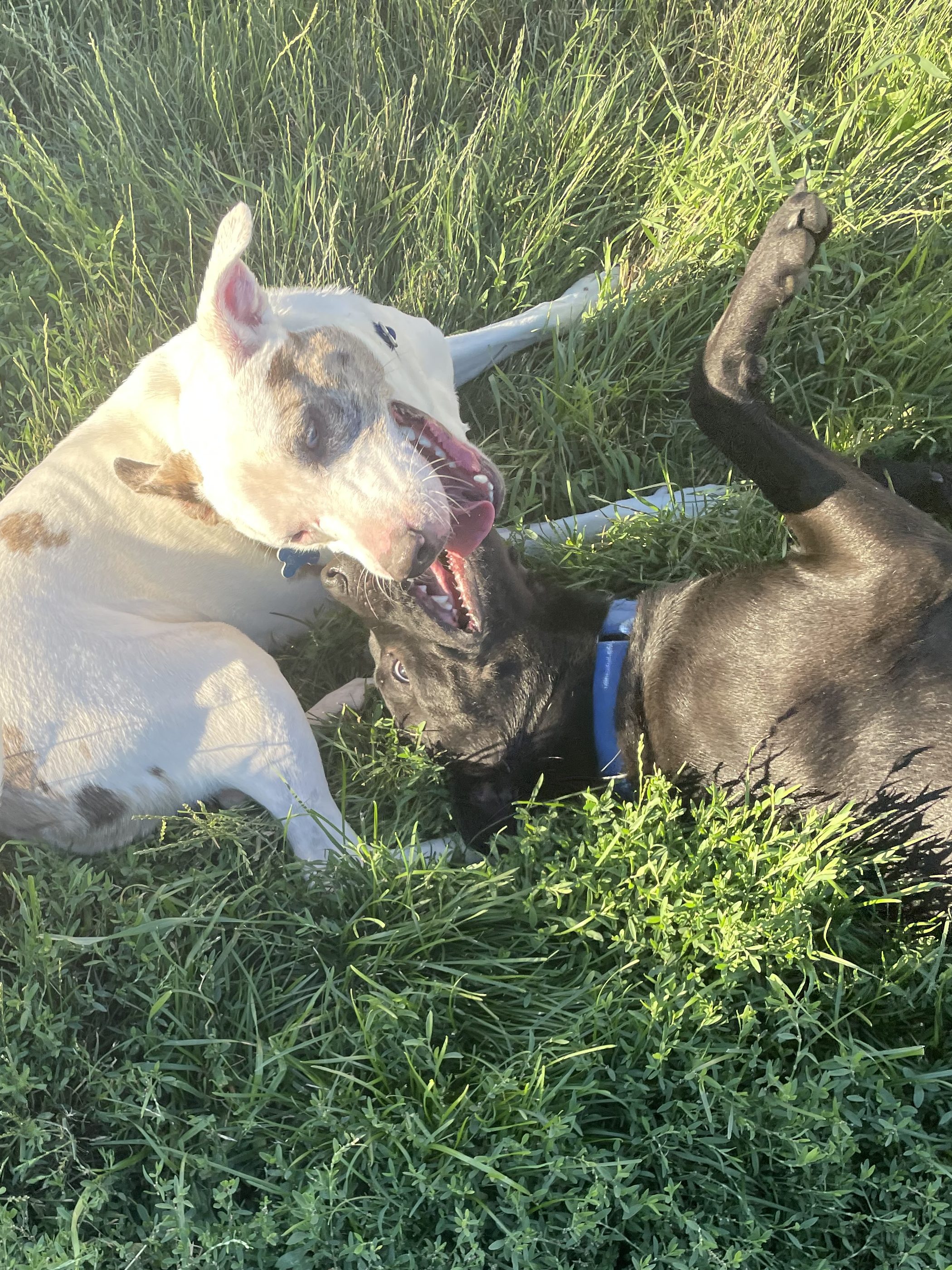
Dogs communicate with each other in ways that humans can only hope to fully understand. Tiny movements, subtle expressions, vocalizations, body posture, and even scent all play a role in how dogs interact.
Even the most experienced trainer cannot communicate with a dog in the same way another dog can.
A puppy can be redirected by a human hundreds of times for jumping, biting too hard, or ignoring boundaries. But one appropriate correction from another dog can sometimes communicate the lesson instantly.
Dogs speak a language that we can observe and interpret, but they speak it fluently with each other.
This is one of the reasons early social experiences are so important.
Puppies separated from their mothers and littermates too early are more likely to develop behavioral challenges later in life because they miss important opportunities to learn from their family.
Just like human children learn by watching and interacting with others, puppies learn critical life skills through their relationships with their mother and siblings.
During their first weeks and months of life, puppies begin learning:
- Bite inhibition (how hard is too hard during play)
- Appropriate play behaviors
- How to read body language
- How to set and respect boundaries
- Patience and impulse control
- Confidence in new situations
- How to communicate with other dogs
- Basic social skills
- House-training habits by observing their mother
Without these early lessons, humans often have a much harder time helping puppies develop appropriate social behaviors.
The Emotional Benefits of Dog Friendships
Positive interactions with other dogs can provide much more than just play.
For many dogs, healthy social interactions provide mental stimulation, physical exercise, emotional comfort, and confidence.
I remember one dog in particular who came into the shelter as a stray.
She was tiny, only about 15 pounds, and absolutely terrified of people. Whenever we approached her kennel, she would immediately retreat into the corner. If we tried to remove her, she would snap at our hands or the leash, and sometimes she would even urinate from fear when a person came near.
After no owner came forward to reclaim her, we decided to introduce her to another dog who was slightly larger than she was.
The moment she saw that dog, everything changed.
She ran to the end of her leash, desperately trying to reach her new friend. When she was finally allowed to interact, she sprinted over, rolled onto her back, and did everything she could to convince the other dog to play.
The older dog wasn’t interested in wrestling, but the little stray didn’t seem to care. She happily followed her new friend around the yard, completely relaxed for the first time since arriving at the shelter.
Then something incredible happened.
After only a few minutes, she walked back over to me, licked my hand, and rolled over for belly rubs.
This was the same dog who had been too frightened to allow us anywhere near her just moments before. Somehow, spending time with another dog gave her enough confidence to begin trusting the people around her too.
A few days later, she was adopted into a home with another dog to call family.
And all of us knew she had found exactly what she needed.
Stories like hers are one of the reasons I will always advocate for giving dogs the opportunity to interact with other dogs when it is safe and appropriate.
But something else I learned while working in the shelter was just as important:
Some dogs simply don’t want dog friends.
And that deserves to be respected too.
Why Some Dogs Might Not Want Friends
Breed
Selective breeding has shaped much more than a dog’s appearance. It has also influenced how dogs think, work, and interact with the world.
Some breeds, particularly livestock guardians and certain protection breeds, were developed to be more independent or naturally more cautious around unfamiliar dogs.
A dog who prefers distance from other dogs may not be lacking social skills—they may simply be genetically predisposed to a different style of interaction.
Lack of Socialization
A lack of positive social experiences, especially during important developmental periods, can affect how comfortable a dog feels around others.
Dogs who were not given safe opportunities to learn how to interact may not understand appropriate canine communication.
It is also important to remember that dogs do not all greet each other the same way.
Some dogs feel comfortable meeting off-leash in a neutral area. Others need slow, structured introductions. Some dogs become frustrated when restrained by a leash or separated by a fence, making them appear less social than they truly are.
Context matters.
Age
Age can greatly influence a dog’s desire to interact.
A young puppy who wants to jump, chase, and wrestle may be overwhelming for an older dog who simply wants a peaceful nap.
A senior dog who chooses to walk away from an energetic puppy is not being antisocial—they are communicating a boundary.
Personality
Personality may be one of the biggest factors.
Some dogs love a crowd. Some prefer one or two close companions. Some would rather spend their entire day with their humans.
There is nothing wrong with a dog who does not want to be everyone’s best friend.
Just like people, dogs have individual social preferences.
Medical Issues
Nobody wants to socialize when they don’t feel good, and dogs are no different.
Pain, illness, or injury can make a dog less tolerant of interactions because they are trying to protect themselves from discomfort.
A sudden change in social behavior should always be considered a possible sign that something medical may be going on.
Trauma
Past experiences can also shape how a dog views other dogs.
Dogs who have experienced attacks, chronic stress, or repeated negative interactions may become defensive because they feel they need to protect themselves.
One of the saddest things I witnessed in the shelter was watching highly social dogs slowly stop enjoying other dogs after months of chronic stress.
Dogs who once happily ran into playgroups eventually became so overwhelmed that they could no longer safely participate in the same activities they once loved.
Some needed muzzles during introductions. Others stopped participating altogether.
It was a powerful reminder that a dog’s behavior is always influenced by their emotional state and environment.
So, Do All Dogs Need Dog Friends?
No.
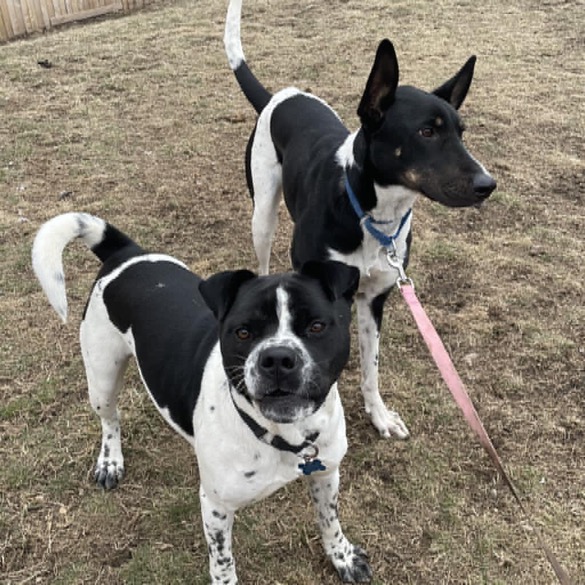
Most dogs benefit from healthy interactions with other dogs, but every dog is an individual.
Some dogs thrive in large playgroups.
Some prefer one or two close companions.
Some are happiest spending their day with the people they love.
One of the biggest lessons dogs have taught me is that respecting their choices is just as important as meeting their needs.
The goal should never be to make every dog love every other dog.
The goal should be to understand the dog standing in front of us.
A social dog will usually seek out interactions, display loose and relaxed body language, and happily return to play after breaks.
A dog who consistently avoids other dogs, stiffens their body, hides, growls, or repeatedly tries to leave may be telling you they are uncomfortable.
Listening to those signals is one of the best things you can do for your dog’s mental well-being.
Social dogs deserve opportunities to socialize.
Selective dogs deserve slow, thoughtful introductions.
Dogs who prefer human companionship deserve owners who do not force them into uncomfortable situations.
Every dog deserves to have their individual needs respected.
Because the goal is not to create dogs who love everyone.
The goal is to create dogs who feel safe, understood, and fulfilled.

 The Katz Nest
Leave a response here!